Resources Update

We were tasked with finding an engaging digital activity for young adolescents three female and two males who needed motivation to engage in the learning process. Having received delivery of a podcasting system in the centre, we thought that this would be a good project to work on. It would involve young people working collaboratively and storyboarding their recording and speaking into a microphone. We decided to see what would happen. We set up the workshop and began to show the young people what was required. When asking for a volunteer to speak into the microphone there were no takers. I explained that their recording would be uploaded to our server and be available for anyone with an internet connection.

Still no volunteers. I said, “well if that is the case, we will just have to upload silence and list their names to the recording and upload it”. There was one of the lads sitting in the chair whose body language was very negative, it was plain that he was not going to get involved in the initiative, arms folded, slumped in the chair. No one wanted to engage, I asked what they might want to record and there was silence. I asked what music they liked and one of the girls said that they liked Rap music and that the lad who was negative was great at rapping.
 They encouraged him to take the microphone and give it a shot. After some cajoling peer pressure, he reluctantly took the microphone and began delivering a rap song which the whole group encouraged. I recorded it and after it had finished the group celebrated by cheering and congratulating him. He asked me to play it back and we all listened. He then began to evaluate his performance and said he thought it would sound better if he did it again. The second time was much better he was more relaxed. I then suggested they could create a story about some element of their lives. They all became enthusiastic. The two of girls decided to write a report about life in their neighbourhood with one of the lads. The rapper and one of the girls began writing a rap about their lives in the neighbourhood.
 The young people worked together to create a report in writing. They then developed a story that they told and included the rap music around the piece. We recorded it and uploaded it to the server for all to hear. They were engaged in the learning and talked about doing other podcasts. We believe that using the medium of podcasting engaged these reluctant learners into being able to write from their own experiences and give a voice to their issues in the community.
Mike Carter - IT Consultant in Education, Nice Co, Gateshead, UK
Educator, working hard to put technology into the hands of young people.
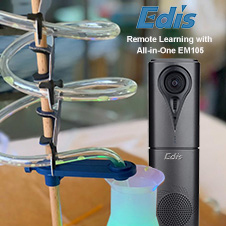
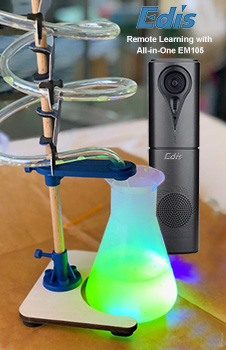 I was talking to a teacher friend who was saying how difficult it was for her to show experiements in action now with lockdowns.
I said imagine taking a hand held, All-in-One Video conferencing camera into your Chemistry Lab, talking to your students online via WiFi using the adjustable tilt lens control to target your experiment and listening to their reactions over the built-in speakers as the experiment proceeds
It's not a dream it's reality today you can do exactly that while protecting your students and engaging them in the most exciting and realistic remote learning experience yet
and ... think of the many other places where you can create remote learning with a portable device like this using live streaming
Just plug into your laptop, tablet or mobile phone with a USB cable and your Remote Learning system is ready to go live !
David Edis-Bates C.Eng MIET dip Couns
 The choice of PC, Laptop orTablets in the Classroom and for remote learning is really still a matter of horses for courses
PCs are now very different in physical size and abilities to their predecessors and with small sze and plenty of memory they can be fitted behind a monitor, they can be fitted with adequate processor power and storage and can be configured for the most complex needs of the most taxing subjects like drawings, video creation and engineering design etc with hardly any limitations. They are also fixed with cabling normally so are secure, non portable and able to be connected to a secure and wired network without communication failures seen with WiFi
Laptops are less powerful usually but have most of the features of PCs with the advantage of being portable and can be connected using WiFi in a host of situations where PCs might be limited due to non-portability
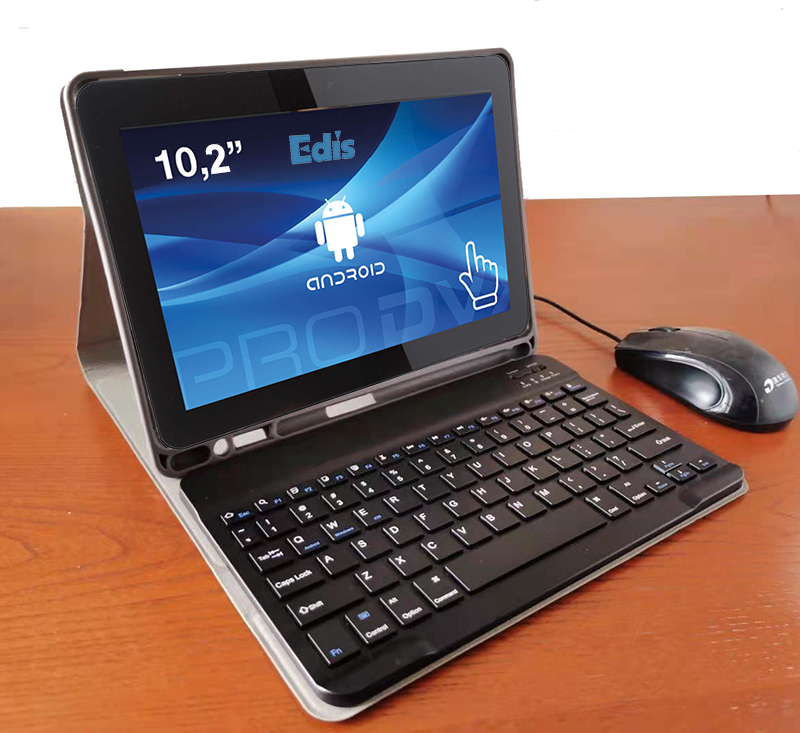
Tablets especially with keyboards are an ideal solution in Primary schools where the power of a PC or Laptop is not needed, young users especially are usually familiar with the Android or iPad operating systems having experienced them at home and can very quickly enjoy learning from an intuitive, familiar and low cost device.
Security is a difficulty with portable devices but they do lend themselves for remote learning in the current situation with Covid virus and tablets are a very low cost way to provide remote learning at home for those unable to afford laptops or PCs
For a much fuller description of the Pros and Cons of these grat learning platforms see the article here by The Stone Group
Written by David Edis-Bates C.Eng MIET Dip Couns
See also our article on Beating Covid by Remote Learning
 Paul Woods, principal of Westminster Academy in Central London, said his school was continuing with the full timetable, with all lessons live-streamed to all 1,100 pupils.
He said: ‘Every child has been given a Google Chromebook and we are sticking to our normal timetable. We like having the real-time interaction, not just for education reasons but we can monitor our students’ emotions at a time when things may be difficult for them.
‘Teachers are able to see in real time how a child is coping and whether they are adapting well in these challenging times.
‘It’s certainly not a substitute for being in the classroom but it’s the next best thing.’
A very basic tablet with keyboard provides an excellent and low cost way for schools to help their children access remote learning - when covid is eventually relegated to a nuisance rather than a pandemic these low cost, excellent tablets can be used in the classroom on the school's own network. They have eveything needed and can have other accessories like headsets added
Written by David Edis-Bates C.Eng MIET Dip Couns
See also our article on PCs versus Laptops and Tablets
 Cerebral palsy is a developmental disorder and leading cause of disability in young children. It affects approximately 500,000 children and adults, with around 8,000 babies and between 1,200 and 1,500 preschool-age children diagnosed each year.
Cerebral palsy occurs as a result of a brain injury sustained during fetal development or birth. However, because the symptoms of CP affect a child’s coordination and independent movement, the injury is not always diagnosed right away, especially when the symptoms are mild.
Parents usually notice that something is wrong when a child fails to reach developmental milestones such as
- rolling over
- crawling
- walking
This may lead to a diagnosis later in life, accounting for the children who are diagnosed as toddlers.
Cerebral palsy is caused by damage to the motor cortex of the brain. This is the part of the brain that affects muscle control and coordination.
For this reason, children with cerebral palsy frequently struggle with walking and fine motor skills. The type and severity of symptoms can vary significantly from one patient to the next, and an individual’s case may be made more complex by the presence of coexisting conditions such as
- cognitive disability
- epilepsy
- vision problems
- and more
CP treatments are always highly individualized to suit the needs of the patient. There is no cure for cerebral palsy, but many treatments and therapies exist that can provide relief from symptoms.
Wbsite : Providing Our Community With Information, Resources, & Support