World-class experiences
The rich experiences of others from around the world

CDEC Ltd - AV Awards 2011 Finalist uses Edis AV products for Litherland High School
A 27.5 million (US$41 million) next-generation school which has just been completed at Litherland in Sefton, Liverpool UK was a finalist project in the AV Awards 2011 last week.
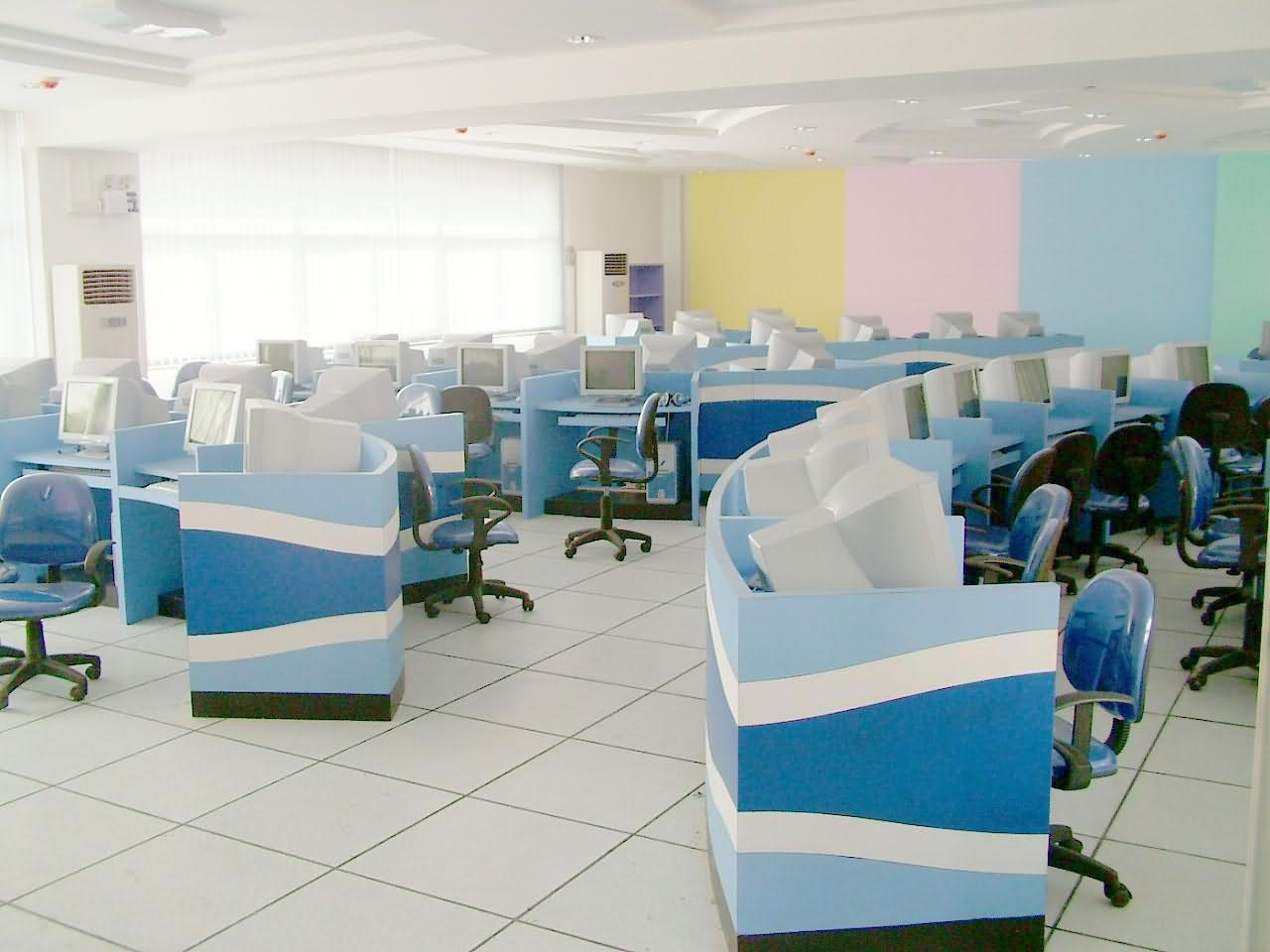
The hi-tech solar powered building boasts colour-coded rooms featuring the latest computers along with dance and recording studios. 
The school is the first in Sefton, Liverpool to be completed under the Building Schools for The Future programme.
It features outside classrooms, solar panels and a wind turbine with separate hairdressing and beauty salons equipped to professional standards and interactive classrooms with projectors and sound systems.
School bells are replaced by classical music which change on a fortnightly basis.
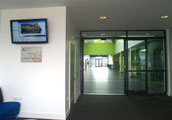
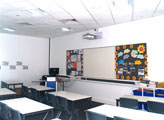
The colour coding ranges from green for student support areas to blue for calm classroom areas, to red or yellow for music and dance.
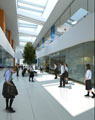 Headteacher Jim Donnelly said he believed the improvements were "long overdue." He added that: "The building has been carefully and individually designed to enhance learning in the 21st century".
The central avenue unites the three distinct curriculum areas of the school and features the professionally-designed hairdressing and beauty salons; "it is called the Avenue of Stars to reflect our strong links with Hong Kong."
The school's old building was the first school to be opened by Lancashire County Council after the Second World War which will now be demolished to make way for a new "village green" for the use of the school.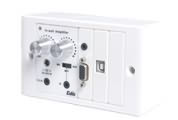 The school building is 10,900 m2 Sheppard Robson, the arcitect, is working with Kier Education on a One School Pathfinder to provide a bespoke tailored design for a school providing interactive classrooms to enhance learning.
The new Litherland High School embodies the vision of the staff and students into an innovative interactive learning environment, a radical departure from the traditional institutional school style.
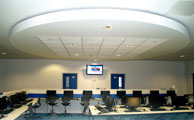
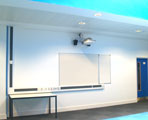
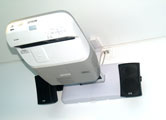
 Interactive classrooms include Edis EA35 In-wall amplifiers with microphone inputs, Fast-install cable kits and E206 wall mounted speakers either side of short throw Epson projectors, Digital signage features Edis World Beater LCD Tilt wall mounts with all Audio Visual equipment supplied and installed by CDEC Ltd who are Finalists in the AV Awards 2011.
 In a famous story about languages, researchers studying the Greenland Inuits documented their use of 15 different terms for snow. By way of comparison, the Navajo have two – one for falling snow, and a second for everything else. In the use of technology in education we have a growing set of terms that appear on the surface to represent the same thing – distance learning, elearning, blended learning for example. In the spirit of Greenland’s Inuits I’d like to suggest these terms do have different shades of meaning, and I’d like to join those calling for adding another term to the list– connected learning.
At Miami Dade College, more than 30,000 students cannot take courses required for their programs because there are not enough seats available in classrooms. With recorded lectures and interactive courseware, classrooms can be reserved for personal interaction and exercises, and thus scheduled more efficiently. Enabling greater access to higher education and increasing capacity are critical objectives in the current economic crisis.
But access and capacity are not the goals driving what I am referring to here as connected learning. The technology experiments we are conducting at Wharton have a very different objective, and as a result, a different design for technology enabled learning environments. Our objective is to use technology to take advantage of the fact that distance between learners sometimes provides opportunities for learning that would never work as well in a traditional classroom. Connected learning seeks to explore alternative venues while maintaining the immediacy and intimacy of the traditional academic community. When successful, the result is a higher quality experience and stronger learning outcomes than would be available through traditional means.
This summer, for example, we had students working summer jobs and internships in companies all over the world, in workplaces at Google, Microsoft, Cisco and Apple, at manufacturers in Australia, China and Japan, financial service firms on Wall Street and tech firms in Israel. Each Tuesday evening 15 of these students joined in a web conference with Tom Lee, a faculty member conducting class from Wharton San Francisco.
The class focus is the design and development of new web based products and services. The differing perspectives provided by students in various summer work and internship sites represent a rich resource for discussion and team-based project coursework. This connected classroom now has access through internships to a global laboratory, with diverse settings for testing and experimentation, and for exposing academic models and textbook analysis to the informed and immediate critique of current practitioners. The distance bridged by connected learning is not just geographical, but can include the divide between practice and the academy.
At its root, this is not really new. Practicums, internships and field studies have a long tradition in universities. John Dewey outlined the importance and processes of reflection in practice over 100 years ago. What is different is that our technology now allows us to transcend the barriers of distance and time much more effectively than was possible before. Incremental quantitative advances in bandwidth, video frames per second, cloud based storage and processing and other technologies have reached a tipping point, with qualitatively new opportunities for learning now emerging. Connected learning is the effort to explore the added value of distance in our programs of study, with our students acting as agents in wider communities beyond the campus ivy covered gates.
About the Author
Don Huesman is the Managing Director of the Innovation Group at the Wharton School
 Illiteracy undermines efforts to combat social problems, such as poverty and diseases, and threatens social stability - UN Secretary-General Ban Ki-moon.
 Nearly 250,000 schools have amplified classrooms in the USA so every student can focus on the lesson and not strain to hear the teacher over the ventilation system and other noises.

The justification for supporting amplified classrooms is not children with hearing problems. Classrooms are installing sound systems so children don’t have to strain to hear the teacher and the teacher doesn’t have to talk over noise. What noise?
-
hallway traffic
-
heating system fans
-
paper shuffling
-
dropped pencils
-
whispering
-
desks opening and closing
-
students walking around
Multiply these sounds times 26 students and the noise in a classroom can be very distracting. The teacher’s voice is expected to rise above all of this.
Amplification System Research
Wyoming Elementary in Millburn, N.J. points to research stating children learn better when they hear the teacher clearly. The school installed sound reinforcement systems in every classroom K-3. One teacher commented that she no longer loses her voice by the end of a school day and all students can hear her voice. One parent commented that her son, who suffers from frequent ear infections, no longer misses out on classroom instruction.
Amplified Classrooms Are Growing In Popularity
One company enjoying this popularity is FrontRow, a California-based company that produces amplification systems. FrontRow boasts that over 3,200 school districts now use their equipment. Only five years ago, 1500 districts used the systems so the numbers have quickly doubled.
LightSpeed Technologies in Portland, Oregon, another amplification systems company has seen a 30% growth each year for the past three
years. LightSpeed estimates the systems have been installed in nearly 200,000 classrooms nationwide.
The Cost of Wireless
The cost to install a state of the art amplification system is $1000 to $1500 per classroom. Seattle is spending $1.5 million to install amplification in 1200 classrooms, libraries and gyms, complete with microphones and speakers. The Ohio School Facilities Commission mandates that all new construction or remodeling using state funding must have amplification.
Academic Results
West Orange, N.J. amplified first grade classrooms at St. Cloud Elementary. No other changes were made to curriculum – only amplification. Reading scores in one year went from 59% to 89%. After seeing these results, the district required amplification in other classrooms. Some researchers state that test scores have improved and classrooms are less stressful with amplification. Students state they can now hear a soft-spoken teacher even across the room or when writing on the board.
The Acoustical Society of America
Not everyone is jumping on this bandwagon. Some teachers find amplification annoying. And The Acoustical Society of America does not support amplification in all classrooms. The Society’s suggestion is to reduce noise in the classroom by having better classroom designs.
System Details
Older amplification units were bulky, picked up signals from other rooms, and were manually turned on and off. Today, the systems use infrared technology that eliminates any interference and automatically disconnects when the teacher leaves the classroom. Students do not pick up conversations teachers may have in the hallway, office or bathroom. The microphone is small and hangs on a lanyard leaving the teacher free to teach. A mute button is available for private conversations within the classroom. Teachers must remember to recharge over night.
Students seem to enjoy amplification stating that when the mics are not on it seems like the teachers are whispering. These systems are especially beneficial to students with ADD, ADHD, learning disabilities, language difficulties or hearing problems. It would be difficult to find a classroom without the just mentioned challenges.
Amplification is no longer just for auditoriums and meeting halls.
About the Author
Source: Winnie Hu, New York Times.com, March 16, 2008
The copyright of the article : Amplified Classrooms in is owned by Barbara Pytel. Permission to republish Amplified Classrooms in print or online must be granted by the author in writing. Permission was granted to Edis Trading Limited on 22nd March 2009
Read more: