World-class experiences
The rich experiences of others from around the world
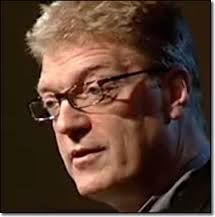 In an exclusive extract from his new book, Sir Ken Robinson argues that our approach to teaching is wrong – and hundreds of years out of date
I’m often asked the same questions: what’s going wrong in education? Why? If you could reinvent education, what would it look like? Would you have schools? Would there be different types? What would go on in them? Would everyone have to go, and how old would they have to be? Would there be tests? If you say I can make a difference in education, where do I begin?
The fundamental question is this: what is education for? People’s ideas differ sharply on this issue. Like democracy and justice, education is an example of what the philosopher Walter Bryce Gallie called an “essentially contested concept”. It means different things to different people according to their cultural values and how they view related issues such as ethnicity, -gender, poverty and social class. That doesn’t mean that we can’t discuss it or do anything about it. We just need to be clear on our terms. So before we go on, let me say a few words about learning, education, training and schools, terms which are sometimes confused.
Learning is the process of acquiring new knowledge and skills. Human beings are highly curious; from the moment they’re born, children have a voracious appetite for learning. For many, that appetite is dulled as they go through school. Keeping it alive is the key to transforming education.
Education means organised programmes of learning. The assumption is that young people need to know, understand and be able to do things that they wouldn’t if left to their own -devices. What those things are and how education should be organised to enable students to learn them are core issues.
Training is a type of education that focuses on learning specific skills. I remember earnest debates as a student about the difficulty of distinguishing between education and training. The difference was clear enough when we talked about sex education. Most parents would be happy to know their teenagers had had sex education at school; they’d probably be less happy if they’d had sex training.
By schools, I don’t mean only the conventional facilities that we are used to for children and teenagers. I mean any community of people that comes together to learn with each other. School, as I use the term here, includes home-schooling, un-schooling and informal gatherings both in person and online, from kindergarten to college and beyond. Some features of conventional schools have little to do with learning and can actively get in the way of it. The revolution we need involves rethinking how schools work and what counts as a school. It’s also about trusting in a different story about education.
Happily ever after?
We all love stories, even if they’re not true. As we grow up, one of the ways we learn about the world is through the stories we hear. Some are about our own families and friends. Some are part of the larger culture – the myths, fables and fairy tales that have captivated people for generations. In stories that are told often, the line between fact and myth can become so blurred that we mistake one for the other. This is true of a story that many people believe about education, even though it’s not real and never really was. It goes like this.
Young children go to elementary school mainly to learn the basic skills of reading, writing and mathematics. These skills are essential for them to do well in high school. If they go on to higher education and graduate with a good degree, they will find a well-paid job and the country will prosper too.
In this story, real intelligence is what you use in academic studies: children are born with different amounts of this intelligence, so some naturally do well at school and others don’t. The ones who are really intelligent go on to good universities. Those who graduate with a good university degree are guaranteed a well-paid professional job with their own office. Students who are less intelligent naturally do less well. Some may fail or drop out. Some who finish high school may not go any further in education and look for a low-income job instead. Some will go on to college but take less academic, vocational courses and get a decent service or manual job, with their own toolkit.
When it’s put so baldly, this story may seem like too much of a caricature. But when you look at what goes on in many schools, when you listen to what many parents expect of and for their children, when you consider what so many policy-makers around the world are actually doing, it seems they really believe that the current systems of education are basically sound, and that they’re not working as well as they should only -because standards have fallen. Consequently, most efforts are focused on raising standards through more competition and accountability. You may believe this story too and wonder what’s wrong with it.
This story is a dangerous myth. It is one of the main reasons why so many reform efforts do not work. On the contrary, they often compound the very problems they claim to be solving, such as the alarming drop-out rates, the levels of stress and depression – even suicide – among students and their teachers, the falling value of a university degree, the rocketing cost of getting one and the rising levels of unemployment among graduates and non-graduates alike.
Mass production
Politicians scratch their heads over these problems. Sometimes they punish schools for not making the grade. Sometimes they fund programmes to get them back on track. But the -problems persist and often get worse, because many of them are caused by the system itself.
All systems behave in ways that are particular to them. When I was in my twenties in Liverpool, I made a visit to an abattoir. (I don’t remember why. I was probably on a date.) Abattoirs are designed to kill animals. And they work. Very few escape and form survivors’ clubs. As we came to the end, we passed a door that was marked “veterinarian”. I asked the guide why the abattoir had a veterinarian – wasn’t it a bit late for that? He said that the veterinarian came in periodically to conduct random autopsies. I thought, he must have seen a pattern by now.
If you design a system to do something specific, don’t be surprised if it does it. If you run an education system based on standardisation and conformity, which suppresses individuality, imagination and creativity, don’t be surprised if that’s what it does.
There’s a difference between symptoms and causes. There are many symptoms of the current malaise in education and they won’t be relieved unless we understand the deeper problems underlying them. One is the industrial character of public education. The issue in a nutshell is this: most developed countries did not have mass systems of public education much before the mid-19th century. These systems were developed to meet the labour needs of the Industrial Revolution and they are organised on the principles of mass production. The standards movement is allegedly focused on making these systems more efficient and accountable. The problem is that these systems are inherently unsuited to the wholly different circumstances of the 21st century.
Creative Schools: revolutionizing education from the ground up by Ken Robinson and Lou Aronica is published by Allen Lane. www.penguin.co.uk
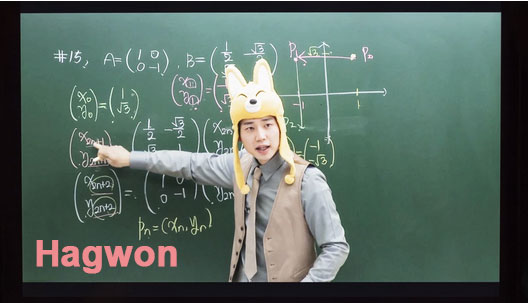 SEOUL — Clasping his headphones and closing his eyes as he sang into the studio microphone while performing a peppy duet with one of South Korea’s hottest actresses, spiky-haired Cha Kil-yong looked every bit the K-pop star.
Cha Kil-yong is a popular online math tutor in South Korea. Cha often dresses up for his program to engage students' attention.
But Cha is not a singer or actor. No, he’s a unique kind of South Korean celebrity: a teaching star.
And the song he was singing with Clara, a Korean mega celebrity, in a music video that wouldn’t be out of place on MTV? It was called “SAT jackpot!”
In this education-obsessed country, Cha is a top-ranked math teacher. But he doesn’t teach in a school. He runs an online “hagwon” — or cram school — called SevenEdu that focuses entirely on preparing students to take the college entrance exam in mathematics.
Here, teaching pays: Cha said he earned a cool $8 million last year.
Cha keeps many masks and props in his SevenEdu filming studio. (Shin Woong-jae/for The Washington Post)
“I’m madly in love with math,” said Cha, looking the height of trendiness in his crimson shirt and pants and tweed jacket, in his office in Gangnam — a wealthy part of Seoul famous for its conspicuous consumption and featured in the song “Gangnam Style.”
It’s hard to exaggerate the premium South Korea places on education. This is a society in which you have to get into the right kindergarten, so that you can get into the right elementary school, then into the right middle school and high school, and finally into the right college. Which, of course, gets you the right job and scores you the right spouse.
There’s even a phrase to describe the Korean version of a helicopter mother: “chima baram” — literally “skirt wind,” to describe the swish as a mother rushes into the classroom to demand a front-row seat for her child or to question grades.
Many Korean families split and live on opposite sides of the world in pursuit of a better education: The mother and children live in the United States or some other English-speaking country, the better to secure entry to a prestigious university (preferably Harvard). The “goose father” continues working in South Korea, flying in to visit when he can.
All of this combines to make South Korea’s equivalent of the SAT the most important event in a young person’s life.
As such, the vast majority of teenagers here do a double shift at school: They attend normal classes by day but go to hagwons for after-hours study. Increasingly, online hagwons are replacing traditional brick-and-mortar cram schools. The hagwons have become a $20 billion industry.
This devotion to studying is credited with helping South Korea consistently rank at the top of the developed world in reading, math and science, although the latest rankings from the Organization for Economic Cooperation and Development also show that Korean students come last when asked whether they are happy at school. South Korea also has the highest suicide rate in the developed world, which many suggest is related to a high-stress focus on education.
Some politicians and educators are questioning whether things have gotten out of hand. But even parents opposed to this punishing system find it difficult to opt out — their children complain that they can’t keep up if they don’t go to a hagwon.
That’s good news for instructors like Cha, who started teaching at a hagwon to pay his way through his PhD program.
About 300,000 students take his online class at any given time, paying $39 for a 20-hour course (traditional cram schools charge as much as $600 for a course). He teaches them tricks for taking the timed exams, including shortcuts that students can take to solve a problem faster.
Asked what makes him stand out, Cha said: “Suppose you give the same ingredients to 100 different chefs. They would make different dishes even though they’re working with the same ingredients. It’s the same with a math class. Even though it’s all math and all in Korean, you can use different ingredients to come up with different results.”
His studio is set up with a green chalkboard and desks, and behind the camera are piles of props — including hippo and Batman masks and a gold sequined jacket.
“You’re not only teaching a subject, you also have to be a multitalented entertainer,” said Cha, declining to give his age and offering only that he’d been working for 20 years.
On SAT day, he visits schools to offer encouragement to test takers. He also does television ads, endorsing products such as a red ginseng drink meant to boost brain power.
Kwon Kyu-ho, a top-ranked literature teacher, also appears with K-pop stars and has a lucrative side business in celebrity endorsements, lending his name to a chair meant to help people study better.
Maintaining his position doesn’t require just good lessons. Kwon, 33, also gets regular facials and works out, and he said some teachers even have stylists..
“I always wanted to be a teacher, but I feel that regular school teaching has its limits. There is a certain way you have to teach,” said Kwon, whose lessons appear on the sites Etoos and VitaEdu. “And, of course, I’m making a lot more money this way.”
He wouldn’t disclose how much he earned, only that it was “several millions” of dollars a year. The secret of his success, Kwon said, was finding the parts of tests that make most students stumble. He focuses lessons on those problem areas.
This style of education has its upsides, he said.
“I think one of the benefits of private education is that teachers compete with each other and try to develop higher quality content,” he said. “We have money. We can invest in ways that normal schoolteachers can not.”
As President Park Geun-hye promotes a “creative economy” as the key to taking South Korea to the next level in its development, many analysts say the country would do well to take a more creative approach to education.
Lee Ju-ho, who was minister of education until last year, is among them.
“All this late-night study could lead to problems in enhancing their other skills, like character, creativity and critical thinking,” he said. “Hagwon is all about rote learning and memorization.”
Lee said all the problems stem from the college admissions procedures, which have been slow in looking beyond test scores to other criteria such as extracurricular activities and personal essays, as is common in many Western countries.
“We really need to change,” said Lee, who is now a professor at the Korea Development Institute’s School of Public Policy and Management.
By Anna Fifield Wshington Post December 30
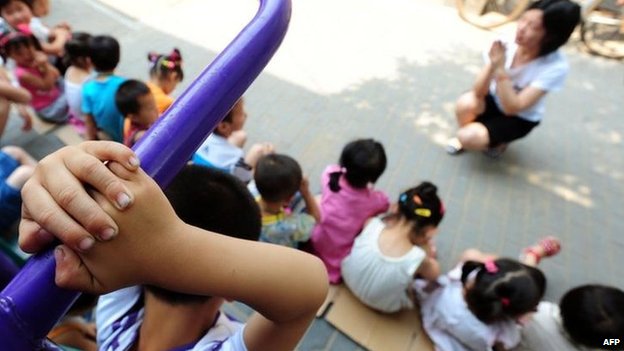 Thousands of pre-schools in China are to adopt an early learning programme developed in Northern Ireland.
Early Years, an organisation that works with young children, will train staff in thousands of institutions.
Chief executive Siobhan Fitzpatrick said educators from China were impressed by their programme while on a fact-finding mission earlier this year.
"They were intrigued by our child-centred approach, where children lead the curriculum," she said.
'Respecting difference'
"They were also intrigued by the level of community and parental involvement, something that would be in contrast to the traditional approach in China."
China's education system is often seen as an example for other countries to follow, with Shanghai coming top in international tests in maths, reading and science.
Taken every three years by 15-year-olds, the Pisa examinations have become one of the most influential international benchmarks for education standards.
When it comes to teaching very young children, the culture is very different, according to Chang Si of Hebei Early Education Institute.
"Children come to kindergarten at 07:30 and stay there until 17:30," she said.
"Our institute co-operates with many kindergartens, and we want to be trained in the Early Years course so we can train other teachers and show the methods to parents."
Ms Fitzpatrick said some of its publications would be translated, and staff from Early Years would travel to China next week "to assess training needs and then we plan a delivery of training, both face-to-face and online".
Trading links with China are increasingly important, and she said she was delighted that a Chinese consulate was being set up in Belfast.
"We ploughed this furrow on our own, but a consulate in Belfast would ease the development of other relationships for us in China," she said.
"We are indebted to Invest NI for the support we have received over the last two years, but I think the arrival of a Chinese consulate in Belfast will further open up the Chinese market for ourselves."
 Cavendish High School in Runcorn, Cheshire, UK is an ever progressing school and is converting to an Academy in 2014 known as - The Cavendish High Academy.
Celia Dickinson the Head Teacher in her welcome message points out that Cavendish High Academy is an Outstanding School for young people with special needs aged 11-19 years. All of our young people have Statements of Educational Need and the school is designated for Severe, Profound and Multiple Learning Difficulties, ASC and Moderate Learning Difficulties with Emotional Vulnerability. However, our school sees young people as individual learners “their uniqueness being the essence of their true self”, special in their own way.
Edis and School Website Now are very pleased to congratulate Cavendish High School on becoming an Academy and also to have created their new website for the occasion
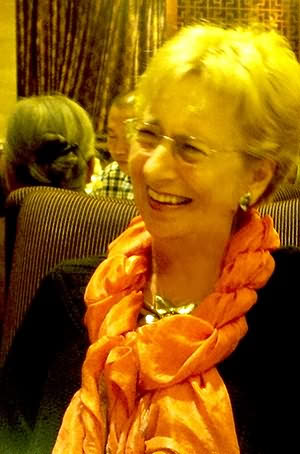 We were more than pleased to welcome Sheila Walker from Tyn Can Learning to Zhanjiang in November to enjoy the opportunity to see and meet people of the “real China”. Sheila was travelling with a UKTI Trade Mission to Shanghai and Changsha to develop learning opportunities for Chinese students in both the UK and China.
Trade Missions are excellent for meeting senior officials with good opportunities to make contacts and see the formal version of China.
As anyone who has visited China will know, China is hugely diverse and it's very easy to get an impression from the big cities that promote the “showcase” view and not the span of diversity that is the “real” China. We aimed to bridge that gap for Sheila's visit so that Sheila had the broadest view of the background and diversity that makes China such a fascinating and exciting place to be.
Our programme started with a visit to a relatively poor rural primary school and two villages some 60 kilometres outside Zhanjiang. The villagers were all relatives of my wife's family, and were mostly boys under school age or at primary school living with, what in the West would be considered, old age pensioners. The middle school aged children and their parents had left the village and were scattered throughout Guangdong province, often living apart.
The children and grandparents were thrilled and excited to see us, we saw the stark, bareness of the classrooms contrasted with the delightful, giggling and laughing pupils who seemed to be the happiest children on earth. We saw the locally made mud brick houses of past party chairmen who had long since left the village to become government and factory bosses.
The next visit was to a modern kindergarten in Zhanjiang. The contrast was huge. Every classroom had interactive technology with projectors and interactive whiteboards, spotless, immaculate facilities, and spotless immaculate children. The atmosphere was very different, the tenseness was palpable as these children of the rich marched in line saying a perfunctory “hello” as they passed by to get on with the relentless task of learning English as demanded by their “tiger” parents.
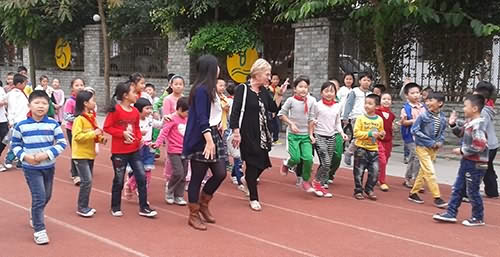 We then visited a Zhanjiang City primary school of some 2,000 pupils aged 7-14. The school was well equipped with new Interactive whiteboards in every classroom of sixty or more pupils. Teachers had blue-tooth microphones and sound re-enforcement with wall mounted loudspeakers to cope with the lively, active and often excitedly noisy classes. The children were really enjoying themselves, articulate and very pleased to swarm around us chatting away to us in their native Cantonese or English at break time. The school had more than 14 Chinese teachers teaching English.
Next it was time to meet the teachers. We met expatriate English teachers, their Chinese teaching assistants and Chinese teachers of English at state and private schools. Times are changing really fast but a common feature is that most middle and high school students are locked into a very high pressure learning machine in large classes and working extremely long hours. School computers are rare, mobile phones banned and with a school day spanning 7am to nearly 11pm for final year students (pre-university) still with up to 70 in a class and attending school six or six and a half days per week. No time for much else apart from lessons and, if boarding, no access to on-line content which is mostly banned by both school and parents.
The ex-pat teachers are mostly native English speaking teachers, employed about 14 hours a week at state schools on low wages, with spartan housing provided, supplementing their earnings by private tuition to pre-school or pre-university students wanting to study overseas. Schools vary, with places at the “best” schools requiring the right connections with all that that involves. Likewise business opportunities with schools, colleges and universities are severely restricted by the need for extensive local connections which in reality means the chances of success are extremely limited.
As Sheila said “I really enjoyed being in Zhanjiang for a few very special days; listening, looking and learning” we also really enjoyed her adventure with us and hope we can develop something together that will have a real impact and create a truly worthwhile learning environment. We very much look forward to her next visit and a big thank you to all of those who made Sheila's visit so enjoyable and worthwhile.
David Edis-Bates C.Eng MIET November 2013