Articles - Latest and archive
Articles to inform, alert and inspire
 After revolutionising the worlds of computing and music – Apple today aimed it's might at the world of school text books in the classroom. Apple announced in New York that they are serious about dominating the textbook market, as they do with music and apps.
Apple has three new products designed to encourage schools to buy iPads. A new free app known as iBooks2 will make school textbooks easier to search and more interactive for students, iBooks Author is a free authoring tool which enables anyone with a Mac to create textbooks and to publish them directly on Apple’s iBookstore and iTunes U app which enables teachers to create and control courses including lectures, assignments, books, quizzes and syllabuses and make them available to over 250 million on-line users.
Apple will be taking on it's biggest textbook competitor Amazon head on, as Amazon have also been pushing its Kindle Fire e-reader into the classroom.
Apple's plan to upgrade the quality of textbooks that are available digitally will really open up the market, says the National Association of College Stores (NACS).
Pundits suggest that the quality of digital textbooks will need to be especially high if cash-strapped schools are to be persuaded to buy large numbers of iPads since education budgets everywhere are feeling the pinch of the world debt crisis.
Apple plans to team up with a number of top educational publishers, including Houghton Mifflin Harcourt , Pearson and McGraw-Hill. Philip Schiller, Apple's senior vice president of worldwide marketing, says that the textbooks, which will initially be available in the USA, will be priced at below $15.
 iBooks 2.0 includes a new category for textbooks. Not just copies of any old textbooks. Apple has completely reinvented textbooks by adding interactivity and making once flat books, dynamic and engaging.
iBooks textbooks include animations, diagrams, photos, videos and amazing navigation. In addition, they will allow readers to highlight passages, add notes and even test themselves with flashcards created from their own notes or from the index.
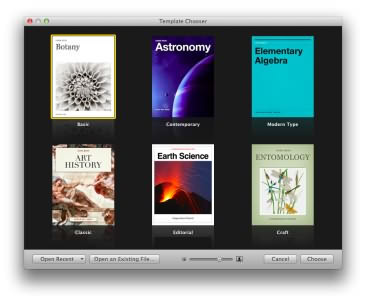 iBooks Author is a free authoring tool enables anyone with a Mac to create textbooks and to publish them directly on Apple’s iBookstore. iBooks Author has some really brilliant templates in various page styles. Including an easy-to-use drag and drop interface, Author enables teachers to quickly build books with interactive photo galleries, videos, keynote presentations, 3D objects and multi-touch widgets.
 And yet another new Education App from Apple is the new iTunes U app which enables teachers to create and control courses including lectures, assignments, books, quizzes and syllabuses and upload them for use by over 250 million users, if they feel the urge. The iTunes U app gives users access to the world’s largest library of free academic content, including course material from top universities like Cambridge, Duke, Harvard, Oxford and Stanford.
"With support for great new features including gorgeous, fullscreen books, interactive 3D objects, diagrams, videos and photos, the iBooks 2 app will let students learn about the solar system or the physics of a skyscraper with amazing new interactive textbooks that come to life with just a tap or swipe of the finger," Apple stated in a press release. "With its fast, fluid navigation, easy highlighting and note-taking, searching and definitions, plus lesson reviews and study cards, the new iBooks 2 app lets students study and learn in more efficient and effective ways than ever before."
Philip Schiller, Apple's senior vice president of worldwide marketing, said that more than 1.5 million iPads are already being used in education and that the iPad was "rapidly being adopted by schools around the world." More than 20,000 educational apps are available in the Apple App Store.
Walter Isaacson in his book "Steve Jobs " says that "Jobs had his sights set on textbooks as the next business he wanted to transform,"
The vision is for "an entirely new kind of textbook that's dynamic, engaging and truly interactive" by featuring interactive animations, diagrams, photos, videos and navigation. Students would be able to highlight portions of the text with their fingers, take notes and instantly transform the sections into digital flashcards, for instance.
"It's one thing to see a picture of a cell structure; it's another to see an animation of the layers of the cell coming together," Madan said. "It's easier for students to understand that than seeing one very complex image, which is all that is possible in print."
Pearson said its "first wave" of books for Apple's iPad comprise about 7,000 pages of content, more than 100 videos and 1,000 "interactive widgets" that include features such as 3-D animation. The publisher is releasing several of its current high school maths and science textbooks for the iPad, covering topics such as biology, environmental science and algebra.
Blumenfeld said a big challenge will be getting more iPads, which start at $499, into the hands of students. Deployment "is expensive and it's a high hurdle for a lot of districts to overcome right now," he said. "The initial cost may be high, but the whole ownership cycle is probably cheaper because you just carry that one iPad," he said. "Doing it this way is actually lowering costs over the longer haul."
So Apple launches the iPad into the classroom and it looks a very impressive line-up, teachers and students in the future should be able to use Apple’s new tools to teach and learn in ways they never thought possible.
 At the BETT exhibition in London Michael Gove, (Education Secretary in the UK) suggests the existing curriculum in ICT has left children "bored out of their minds being taught how to use Word and Excel by bored teachers".
That rang some bells in my head when I remember how Physics lessons left me totally bored and disappointed when I was as keen as mustard to get on with practical electronics. Maybe the time has come for some really interesting and useful "stuff" in the curriculum.
The teaching of computer science in school is to be dramatically overhauled, with the existing programme of study scrapped to make way for new lessons designed by industry and universities, Michael Gove will announce on Wednesday.
In a speech, the education secretary will say the existing curriculum in Information and Communication Technology (ICT) has left children "bored out of their minds being taught how to use Word and Excel by bored teachers".
Instead he will, in effect, create an "open source" curriculum in computer science by giving schools the freedom to use teaching resources designed with input from leading employers and academics, in changes that will come into effect this September.
The announcement follows pressure from businesses critical of a shortage of computer-literate recruits – a deficit highlighted by a Guardian campaign launched this week.
ICT will remain compulsory and will still be taught at every stage of the curriculum. In a speech to BETT, a trade fair which showcases educational technology, Gove will say Britain should revive the legacy of the mathematician and wartime codebreaker Alan Turing by creating a generation of young people able to work at the forefront of technological change.
He will say: "Imagine the dramatic change which could be possible in just a few years, once we remove the roadblock of the existing ICT curriculum. Instead of children bored out of their minds being taught how to use Word and Excel by bored teachers, we could have 11-year-olds able to write simple 2D computer animations using an MIT tool called Scratch.
"By 16, they could have an understanding of formal logic previously covered only in university courses and be writing their own apps for smartphones."
A consultation on the plans will be launched next week. Ministers are keen to see universities and businesses creating a new computer science GCSE and developing a curriculum that encourages schools to make use of computer science content on the web. IBM and Microsoft are already working on a pilot GCSE curriculum.
The British Computer Society (BCS) has developed a curriculum for key stages three and four – the years leading up to GCSE – which has had input from Microsoft, Google and Cambridge University.
In the speech, Gove will set out the government's thinking on computer science and cite its transformational impact on other disciplines.
He will say: "Twenty years ago, medicine was not an information technology. Now, genomes have been decoded and the technologies of biological engineering and synthetic biology are transforming medicine. The boundary between biology and IT is already blurring into whole new fields, like bioinformatics.
"Twenty years ago, only a tiny number of specialists knew what the internet was and what it might shortly become. Now billions of people and trillions of cheap sensors are connecting to each other, all over the world – and more come online every minute of every day."
He will pay tribute to Turing as a hero who "laid the foundation stones on which all modern computing rests".
The speech will be critical of the failure of existing ICT provision. He will say: "Our school system has not prepared children for this new world. Millions have left school over the past decade without even the basics they need for a decent job. And the current curriculum cannot prepare British students to work at the very forefront of technological change."
Outlining the changes, he will say: "The traditional approach would have been to keep the programme of study in place for the next four years while we assembled a panel of experts, wrote a new ICT curriculum, spent a fortune on new teacher training, and engaged with exam boards for new ICT GCSEs that would become obsolete almost immediately. We will not be doing that. Technology in schools will no longer be micromanaged by Whitehall. By withdrawing the programme of study, we're giving schools and teachers freedom over what and how to teach; revolutionising ICT as we know it."
The reform of ICT in schools was welcomed by industry. Peter Barron, Google's director of external relations for the UK, said: "We are delighted that the government has recognised the importance of computer science teaching in schools. Too few UK students have had the opportunity to study true computer science, resulting in a workforce that lacks the key skills needed to help drive the UK's economic growth. We look forward to seeing how these new educational resources develop, based on teaching how computer software works rather than simply how to use it."
Richard Allan, Facebook's director of policy in Europe, said: "Facebook welcomes the government's plans to make ICT teaching in schools more interesting and relevant for young people. We need to improve our young people's skills in this area for the UK to be truly competitive in the digital age.
"Businesses also need to play their part in helping to equip young people with the digital skills they need."
Bill Mitchell, director of BCS Academy of Computing, which was set up to promote computer science as an academic discipline, said: "BCS is extremely pleased that Michael Gove has publicly endorsed the importance of teaching computer science in schools."
Genevieve Smith Nunes, an IT and business studies teacher at Dorothy Stringer high school in Brighton, also welcomed the announcement. She said: "In my own school we have developed our own programme of study anyway, because of the constraints that ICT has – but still incorporating all of the elements that are there [in the existing curriculum].
"If they scrapped ICT, then a lot of teachers might feel that their jobs are at risk – depending on how Gove presents that. That wouldn't be a worry at my school because we're quite forward- thinking about what students need.
"By taking away what is prescriptive, it would allow the teacher and student to develop the [computer science] curriculum together and make it effective, creative and thoughtful … If universities are going to help us develop the curriculum content that can only be a benefit from the classroom teacher's perspective."
 Schools in middle-class areas in the UK could be in line for a “significant” budget boost under the biggest shake-up of education funding in 20 years, research suggests.
The Institute for Fiscal Studies said the new funding system would create winners and losers. Government attempts to overhaul cash allocations for schools in England will create large numbers of “financial winners and losers”, it was disclosed.
The study, by the Institute for Fiscal Studies, said one-in-six schools could see funding cuts of 10 per cent of more as a result of the reforms. A further one-in-10 are likely to receive around 10 per cent more money, it was revealed.
The study said that the reforms will probably result in a radical shift between age groups, with secondary schools receiving less money while budgets rise in the primary sector.
It also claimed that some areas would be hit harder than others, with schools in the North East, West Midlands and Yorkshire and the Humber – regarded as some of the poorest regions of England – losing out.
At the same time, the biggest winners could include parts of the East of England, South East and South West, the study said.
Teachers’ leaders admitted last night that the funding system was in need of a major overhaul, but insisted any decision to cut funding would result in schools being forced to sack teachers, drop subjects and increase class sizes.
But the IFS insisted that the current system was overgenerous to some areas and penalised others.
Luke Sibieta, the think-tank’s senior research economist, said: "There is little doubt that the school funding system merits reform.
An explicit national formula offers significant advantages, including simplicity, transparency and responsiveness of school funding.
But change would also bring costs and disruption with large losses for some schools.
If the Government believes that a national funding formula represents the ideal system, it should begin the transition soon and be more transparent about which schools and local authorities could be most affected."
Currently, funding for schools is largely devolved to local authorities who then award it to individual institutions.
But this has historically created areas that are “over-funded on average” compared to other counties.
In its place, the Government is proposing to “replace the myriad and complex local authority formulae with one centrally set national funding formula”, the IFS said.
The study tests various options open to the Government.
One option would see a “substantial redistribution from secondary to primary schools”, the study said, with the average primary school gaining almost five per cent more funding, while the average secondary loses almost six per cent.
In terms of regions, it said the north east, West Midlands and Yorkshire and the Humber would be likely to receive less money, while others such as the East Midlands and South East receive more.
Individual councils could also become winners and losers, it added.
Primary and secondary schools in Coventry, Liverpool, North East Lincolnshire, Wigan and Wolverhampton would see average falls of six per cent or more…while primary and secondary schools in Derbyshire, Islington and Warwickshire would see average increases of six per cent or more,” it said.
A Department for Education spokesman said: “The IFS agrees that maintaining the current funding system is undesirable and without it school funding may become less transparent and less related to education needs over time. We want to make it fairer, simpler and more transparent.”
"The IFS report is based on its own assumptions of what a funding formula might look like. The consultation on school funding closed last month and ministers are considering its responses carefully before deciding how to proceed.
No decisions have yet been made on a future school funding system.”
Malcolm Trobe, from the Association of School and College Leaders, said: “We want a fair and equitable funding formula. But any attempt to make a wholesale shift from one sector to another – or one part of the country to another – is going to cause significant difficulties.
The bottom line is that a secondary school spends 60 per cent of its money on teaching staff, 20 per cent on support staff and 20 per cent on everything else. Whichever way you look at it, if you are taking a significant hit, the bulk of it is going to fall on staffing. If you’re looking at teaching staff, it is inevitable that it will result in bigger classes and a reduction in curriculum breadth.”
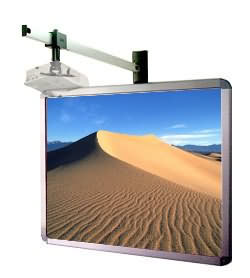 Insight into projector mounts, various styles, lengths and fittings from many different suppliers with a big spread of prices. Your installer will normally decide what's needed for you but you may be interested in the choices available so that you can influence the decision.
Relatively few mounts are made exclusively for the projector that you buy, but these have the disadvantage of needing to be changed when you replace your projector at some later date as they are not universal mounts, and new projector designs change almost as fast as politicians promises.
Mounts may be wall or ceiling mounted. Wall mounts are for short throw projectors, regular projectors need to be 3-4 metres from the screen so wall mounting is tricky and unsightly.
Walls may be solid brick or concrete or hollow stud walls made of wooden battens covered with plaster board or maybe wood surface or even modern corrugated steel with a covering. If a hollow wall the battens may determine the fixing position of the mount (if a simple straight mount that can't be adjusted)
Ceiling mounts need a solid and secure surface and can't be fitted to ceiling tiles directly, they may need an adjustable bracket to cope with a sloping ceiling. Lengths vary from virtually zero to 3 metres and maybe telescopic or fixed designs. (Telescopic or adjustable designs provide scope to use the mount again either elsewhere or with a replacement projector)
A well designed projector mount will normally have a means of hiding the cables inside (cable management) to improve the look of the installation.
There are two main "universal" styles of fixing a projector to the mount; a slotted plate or moveable “ fingers”, which are adjustable with a selection of projector screws to enable almost any projector to be fitted. I say "almost any" as some projectors are not intended for mounting or only have one threaded fixing for a camera type tripod. A universal joint is needed to rotate and tilt the projector horizontally and vertically. It's important that these fixings are adjustable but also sturdy when tightened to prevent the picture shaking or the projector moving.
An issue when fixed to wood joisted ceilings with floors above is that the projector bounces to the tune of upstair activities (wall mounting would overcome this).
I would check (and ask) if correct fixings are used for the wall or ceiling plate as weakness here will result in the mount falling possibly causing injury to those pupils or teacher below (you may need this information for risk assessment forms too).
Colours of mounts vary but the common colours are silver grey, black or white with a matt or gloss finish (or even chrome !). The choice is yours but matt grey tends to show less dirt and marks over time and is probably the most popular - but even the modest projector mount has fashion fads (as do the colours of projectors that you might want to match !)
useful Link
 Challenge - to design an active speaker system for interactive whiteboards that meets the needs of a classroom to a demanding target price.
We researched the acoustic qualities expected of an average UK classroom, which was not good being a 10 metre by 6 metre room often with concrete floor and walls with windows on one side and full of desks and children. The distance from the whiteboard to the rear of the class was typically 6 metres and average background noise level of around 60dB, mostly expected from the pupils. Research suggests that the signal to noise ratio needed to be at least 15dB above the general noise level. So we were looking to design an active speaker system that was loud enough to be heard, could amplify different sources from the teachers equipment and stand up to the “rough and tumble” of a classroom environment.
We tried and tested two “off the shelf” models but neither the product or the suppliers met our design criteria or quality standards, one sample failed on extended testing and neither were really suitable for the classroom. Our normal manufacturer was a large producer for Walmart which meant they would only be interested if the production volumes were high but they had the production engineers and quality systems to get our new product into manufacture. The product had to be a winner in the market place if this factory was involved.
The design progressed with a 30 Watt amplifier in crystal white wood speaker cabinets, steel speaker grilles, special security wall brackets and a wired remote control so that the teacher could control the unit without climbing up a chair to adjust the volume. When we tested a prototype in an anechoic chamber the sound levels at the speaker at 1 metre were just right but at 6 metres the sound level was a little low, were our calculations wrong?. Then it struck me that a classroom was nothing like an anechoic chamber with special sound absorbing walls. We tested again in a classroom with concrete floors, walls and ceiling of the right dimensions. The result a resounding success and the choice of speaker cone and wood cabinet paid off with a >75 dB sound level and a better than expected frequency response at mid-range ideal for voice reproduction.
The price was right, the product was right and the market was just ready. We couldn't find a competing speaker with all the classroom features that we had built-in at anything like our price. The product proved a great success, sales exceeded 20,000 units in the first year which met the factory minimum production runs and the quality levels were better than 99% AQL. By end 2010 the EA015 wall mounted active speaker system had been installed in more than 150,000 classrooms around the world. The pangs of birth had produced a powerful player for us.